Averting Catastrophe: Pakistan's Pivotal Role in Trump's Iran Ceasefire and the Strait of Hormuz Reopening
In a series of dramatic developments that momentarily pulled the Middle East back from the precipice of a full-scale regional conflict, former US President Donald Trump announced two critical de-escalations involving Iran. These included a comprehensive Trump Iran ceasefire between Iran and Israel, putting an end to a tense 12-day confrontation, and crucially, a suspension of a planned US bombing of Iran in exchange for the reopening of the vital Strait of Hormuz. Central to the latter, and arguably the most surprising element, was the unheralded diplomatic intervention by Pakistan, demonstrating its growing influence as a crucial regional interlocutor. This article delves into the intricacies of these agreements, Pakistan's vital mediation, and the enduring significance of the Strait of Hormuz.
De-escalating the "12-Day War": The Iran-Israel Ceasefire
The Middle East held its breath as a direct armed conflict between Iran and Israel escalated rapidly. The hostilities commenced in the early hours of June 13, when Israel launched a large-scale operation, citing concerns over Iran's alleged secret military nuclear program. Tehran swiftly retaliated the same evening with "Operation True Promise 3," targeting sites within Israel. The conflict took an even more dangerous turn on June 22 when the United States joined Israel's campaign, striking three Iranian nuclear sites in Natanz, Fordow, and Isfahan. Iran's response to the US involvement came swiftly on Monday with a missile strike on the US' Al Udeid Air Base in Qatar, signalling a perilous spiral.
Amidst this escalating tension, US President Donald Trump took to Truth Social to declare a "complete and total ceasefire" between Iran and Israel. He outlined a phased de-escalation: an initial 12-hour ceasefire initiated by Iran, followed by Israel, culminating in an official end to the "12-day war" after 24 hours. Trump lauded both nations for their "stamina, courage and intelligence," acknowledging the immense potential for a prolonged and devastating conflict across the region. This swift resolution, orchestrated under immense international pressure, highlighted the urgent need to prevent wider hostilities.
Underlying these hostilities was the contentious issue of Iran's nuclear program. While Israel and the US expressed concerns about its military dimension, Iran consistently denied these accusations. Notably, the International Atomic Energy Agency's Director General Rafael Grossi stated on June 18 that the IAEA had not seen concrete evidence of an active nuclear weapons program in Iran. This sentiment was echoed by US intelligence assessments, which similarly concluded that Iran was not actively pursuing nuclear weapons, as reported by CNN on June 17. The disparity between these intelligence findings and the justifications for military action underscores the complex and often opaque nature of regional security dynamics.
Pakistan's Diplomatic Triumph: Reopening the Strait of Hormuz
Even as the Iran-Israel conflict cooled, another crisis loomed large: a direct confrontation between the United States and Iran. President Trump had issued a stark warning, threatening that "a whole civilization will die tonight" if Tehran failed to comply with his demands, and a bombing campaign against Iran was hours away. However, in a dramatic eleventh-hour reversal, Trump announced a two-week suspension of the planned attacks.
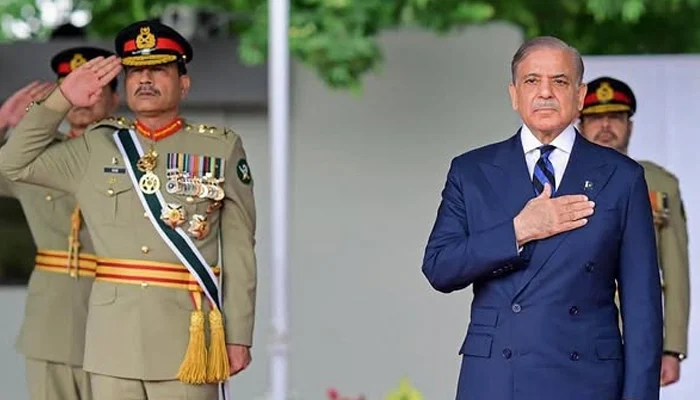
The turning point, as revealed by Trump, was the crucial intervention of Pakistan. He credited Prime Minister Shehbaz Sharif and Field Marshal Asim Munir of Pakistan for their direct appeal to hold off the destructive force. This diplomatic effort came with a significant condition: Iran's agreement to the "COMPLETE, IMMEDIATE, and SAFE OPENING of the Strait of Hormuz." Trump's message, posted just under an hour and a half before his scheduled 8 pm deadline for the attack, signaled a profound shift from confrontation to conditional de-escalation.
Iran's Foreign Minister Abbas Araghchi swiftly confirmed a tentative agreement, stating that Iran's "Powerful Armed Forces" would cease defensive operations if attacks against Iran were halted. Crucially, he also affirmed that "for a period of two weeks, safe passage through the Strait of Hormuz will be possible via coordination with Iran’s Armed Forces and with due consideration of technical limitations." Araghchi echoed Trump's acknowledgment, specifically thanking Pakistan for its last-minute appeal to suspend the US bombing campaign. This moment underscored Pakistan's emergence as a significant diplomatic actor, capable of bridging divides in complex geopolitical landscapes.
The Strait of Hormuz: A Global Economic Lifeline
The Strait of Hormuz is not merely a geographical passage; it is one of the world's most critical chokepoints for global energy supplies. Located between the Persian Gulf and the Gulf of Oman, it is the only sea passage from the Persian Gulf to the open ocean. Approximately 20% of the world's total petroleum liquids consumption, and about one-third of the world's seaborne oil, passes through this narrow waterway. This amounts to roughly 21 million barrels per day, making any disruption here a potential catastrophe for global energy markets and economies.
The strategic importance of the Strait cannot be overstated. Its closure, or even the threat of closure, can send oil prices soaring, destabilize international trade, and have ripple effects across various industries worldwide. Iran, situated along the northern coast of the Strait, has historically leveraged its geographical advantage, periodically threatening to close the waterway in response to international sanctions or military threats. This makes the condition of its reopening a non-negotiable demand for international stability and economic security. Pakistan's role in securing this agreement was therefore not just about de-escalating a regional conflict, but also about safeguarding global economic stability.
Understanding the geopolitics of energy and these critical chokepoints is essential for analyzing global events. Any prolonged closure of the Strait of Hormuz would trigger unprecedented economic consequences, highlighting why diplomatic solutions, even temporary ones like this two-week ceasefire, are paramount.
Implications and Future Outlook for Trump's Iran Ceasefire
While the announcements of these Trump Iran ceasefires brought immediate relief, it is crucial to recognize their temporary nature. The Iran-Israel ceasefire was for 24 hours, and the US bombing suspension for a mere two weeks. These agreements, while vital in preventing immediate escalation, do not resolve the underlying tensions or the fundamental disagreements between the parties involved. They provide a fragile window for further diplomatic engagement, but the path ahead remains fraught with challenges.
Pakistan's successful mediation in the US-Iran standoff highlights its growing diplomatic influence, particularly in a region where traditional power brokers have struggled. Its ability to communicate effectively with both Washington and Tehran, leveraging a history of complex relationships, positioned it uniquely to broker this last-minute deal. This signals a potential shift in regional diplomatic dynamics, with new actors emerging to play critical roles in de-escalation efforts.
The broader implications for Middle Eastern stability are significant. These events underscore the constant threat of renewed conflict and the urgent need for sustained, multilateral diplomatic efforts. The question of Iran's nuclear program, despite intelligence assessments, remains a flashpoint. Maintaining trust, ensuring verification, and addressing security concerns for all parties will be crucial for any long-term resolution. As we reflect on Trump's Iran ceasefires: de-escalating war amid nuclear program debate, it's clear these moments of truce are just the beginning of a much longer, more arduous diplomatic journey.
Navigating the Nuances of Middle East Diplomacy
The Middle East is a mosaic of competing interests, historical grievances, and shifting alliances. Any diplomatic success, even a temporary one, requires navigating this intricate web with extreme caution. The domestic political pressures faced by leaders in Iran, Israel, and the United States further complicate efforts for long-term peace. For Iran, maintaining its sovereign right to a nuclear program (for peaceful purposes, as it claims) is a point of national pride and security. For Israel, existential security concerns drive its opposition to a potentially weaponized Iran. And for the US, balancing its strategic interests with regional stability is a perennial challenge.
The reliance on short-term ceasefires, while preventing immediate bloodshed, also reveals the absence of robust, enduring mechanisms for conflict resolution in the region. The international community, including bodies like the UN and the IAEA, faces the immense task of building trust and verification frameworks that can satisfy all parties and prevent future escalations. This necessitates not just high-level political negotiations, but also sustained engagement at technical and intelligence levels.
In conclusion, the Trump Iran ceasefire initiatives, particularly the one brokered by Pakistan concerning the Strait of Hormuz, represent critical moments of de-escalation that prevented a potentially catastrophic regional war. They underscored the immense fragility of peace in the Middle East and the critical importance of diplomatic interventions, even from unexpected quarters like Pakistan. While these agreements offer a temporary respite, the underlying challenges—from nuclear proliferation concerns to regional power struggles—remain formidable. The path to lasting stability will demand continuous, dedicated diplomacy, a willingness to compromise, and a global commitment to de-escalation over confrontation. These short-term triumphs, however, provide a glimmer of hope that even in the darkest hours, peace can prevail.